If you already run a screen print press or a multi-head embroidery machine, you've probably had a customer ask for something neither setup handles well — a 12-piece order with full-color photo art, or a tiny left-chest logo with too many thread changes to be profitable. That's exactly the gap Direct-to-Film printing fills. Adding a DTF station to an existing shop is one of the easier expansions in decorated apparel, but it does come with its own learning curve, space requirements, and workflow changes. Here's how to fold it in without disrupting the work you're already doing well.
Why DTF Pairs So Well With Screens and Needles
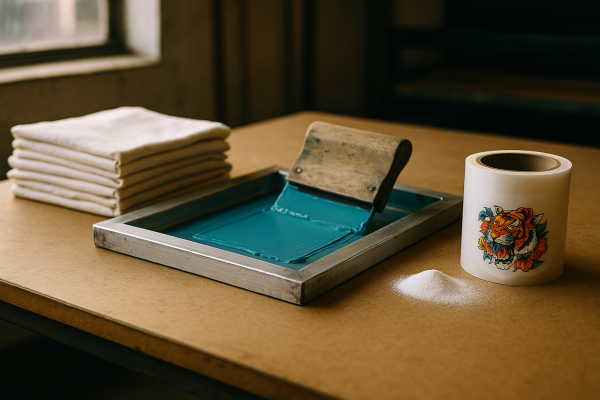
Screen printing shines on large runs of simple-color designs. Embroidery wins on premium logos, hats, and polos. DTF covers everything in between: short runs, full-color art, names and numbers, and tricky substrates like nylon bags or performance fabrics that screen ink and needles both struggle with.
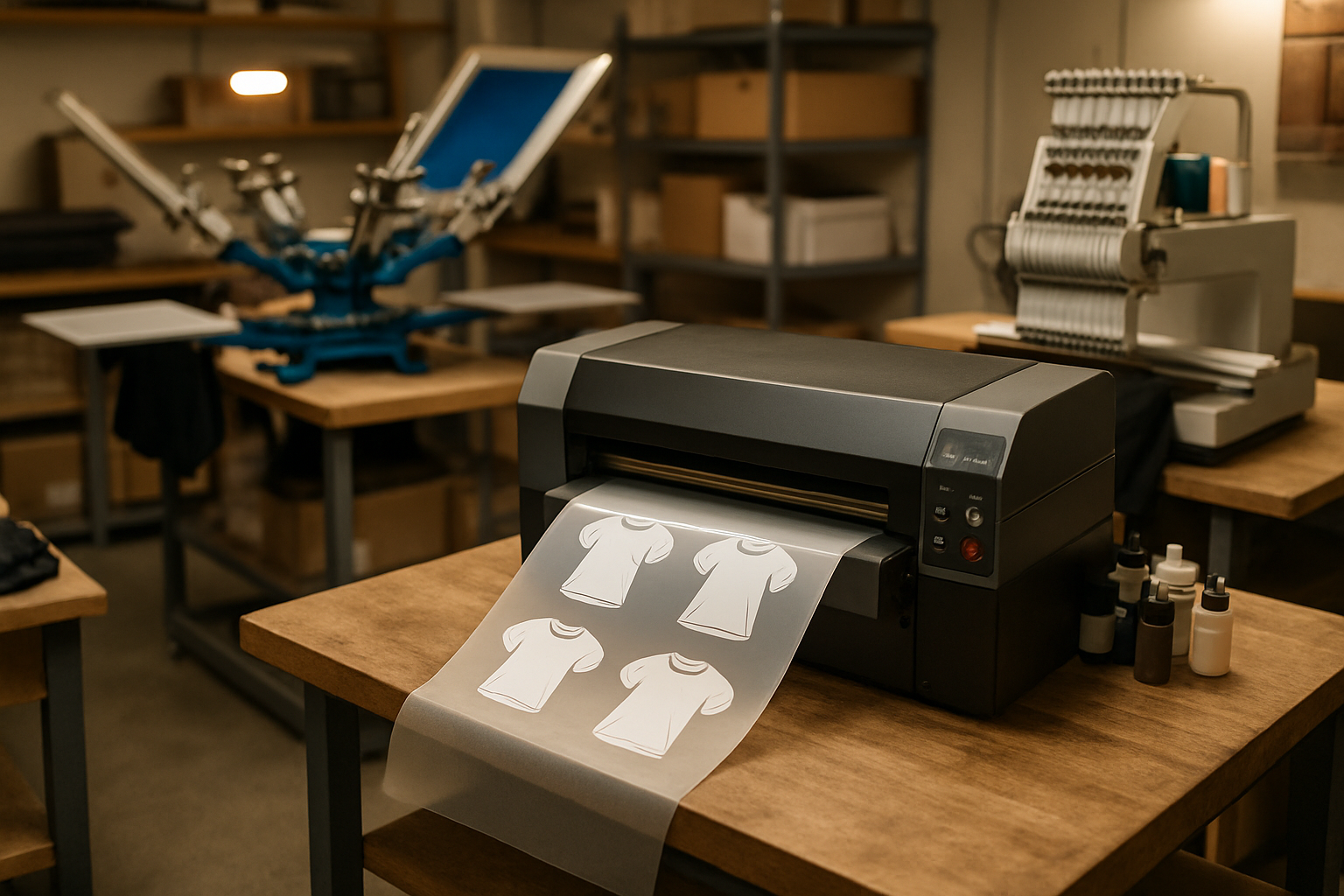
Most shop owners we talk to don't replace anything when they add DTF — they add it as a third lane. A typical week might look like: 500 union tees on the auto press, 48 polos on the embroidery machine, and a steady drip of 6-shirt and 12-shirt DTF jobs that used to get turned away or sent to a contract printer.
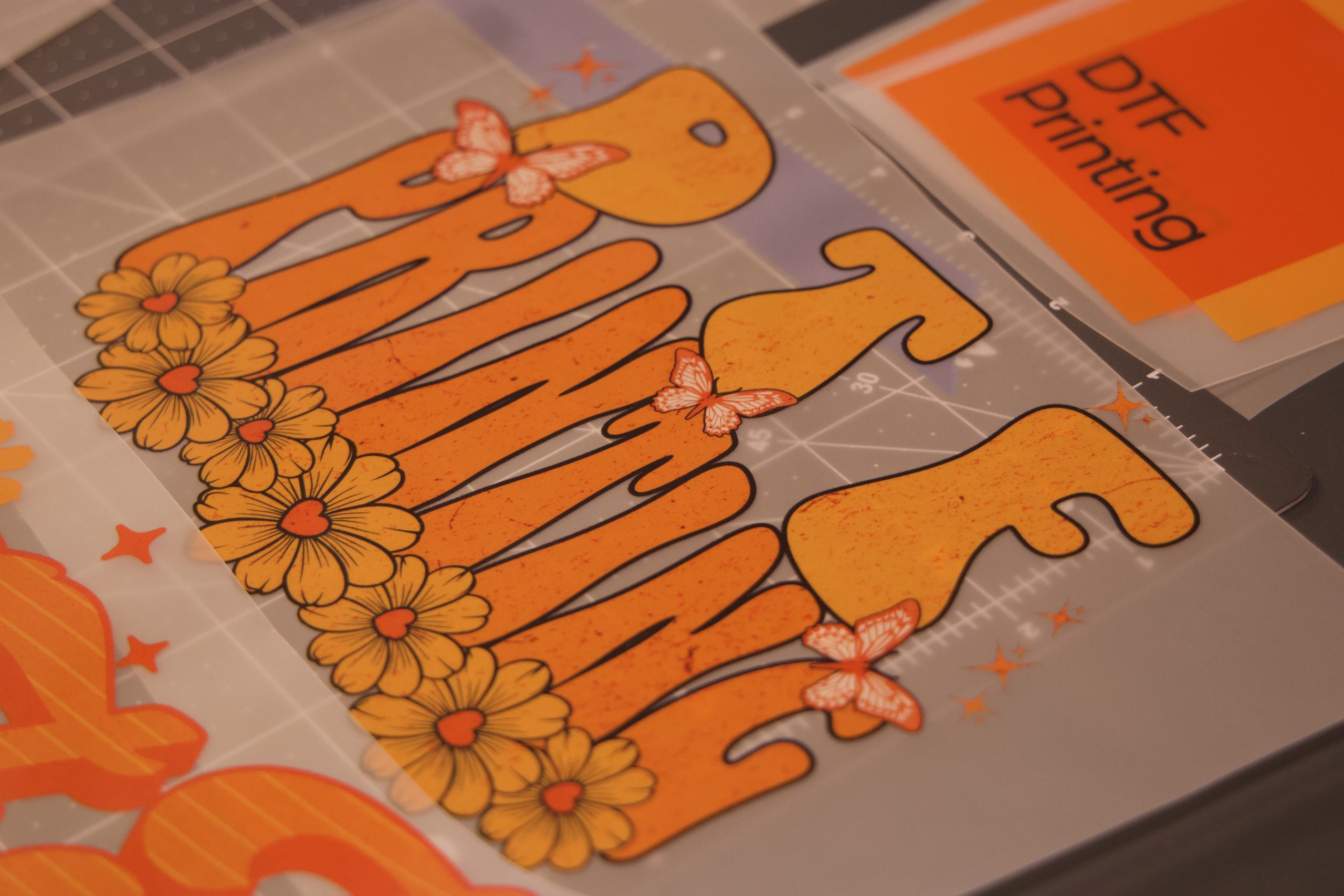
The other quiet advantage: DTF transfers can be made in advance and pressed on demand. That's a big workflow win if your shop already presses tags, names, or numbers.
What You Actually Need to Start
You can spend $2,500 or $25,000 on a DTF setup. The right number depends on volume, but here's the core list every shop needs regardless of budget:
- A DTF printer. Entry-level options are converted Epson L1800 or XP-15000 units. Mid-tier shops usually move to a dedicated 13-inch dual-head printer. High-volume shops jump straight to a 24-inch roll-fed system with a built-in shaker.
- PET film. Cold-peel is the most forgiving for beginners; hot-peel is faster once you're dialed in.
- DTF inks. CMYK plus white. White ink is the maintenance-intensive one — plan around it.
- Adhesive powder. Usually a TPU hot-melt powder in fine, medium, or coarse grades.
- A curing solution. Either a small countertop oven, a forced-air curing drawer, or a shaker-oven combo for higher volume.
- RIP software. CADlink, AcroRIP, or a printer-bundled RIP for handling the white underbase and ink limits.
- A heat press. You almost certainly already own this one.
If you're running screens or embroidery already, you have the heat press, the design software, the order management, and the customer base. That's a huge head start.
Where to Put It in Your Shop
DTF is messier than people expect. Adhesive powder is fine and gets everywhere if you don't contain it, and white ink fumes — while not dangerous in small quantities — are noticeable. A few placement rules that experienced shops follow:
- Keep the printer away from screen reclaim areas. Water mist and ink heads don't mix.
- Keep it away from the embroidery machines. Powder dust on thread tension assemblies causes maddening intermittent problems.
- Ventilate. A small exhaust fan venting outside makes a big difference for both fumes and dust.
- Maintain stable temperature and humidity. Most DTF printers want 65–80°F and 40–60% relative humidity. A garage that swings from 45° to 95° will cost you printheads.
A dedicated 8x8 corner with its own table, the printer, a small powder station, and the curing oven is enough for most shops starting out.
The Workflow Change Nobody Warns You About
Screen printing is a batch process. Embroidery is a set-and-forget process. DTF is neither — it's closer to running a desktop inkjet that needs babysitting. Plan for someone to:
- Shake or stir white ink daily (twice daily in some setups).
- Run a nozzle check every morning before the first print.
- Cap and clean the print head at end of day if the machine will sit idle.
- Refill powder and empty the catch tray between jobs.
- Wipe the encoder strip weekly.
If you skip white ink maintenance for a long weekend, you can lose a $400 printhead. That's the single most common expensive mistake new DTF shops make. Build it into a checklist and assign it to a specific person, not "whoever has time."
Pricing DTF Alongside Your Existing Services
One of the trickier parts of adding DTF is not undercutting your own screen print pricing. A common framework:
- 1–11 pieces: DTF almost always wins on cost and turnaround. Price it as a premium short-run service.
- 12–35 pieces: The crossover zone. Quote both; pick whichever fits the art and deadline.
- 36+ pieces, 1–3 colors: Screen print is still cheaper per piece. Steer the customer there.
- Any quantity with photo art, gradients, or many colors: DTF, every time.
For embroidery overlap, DTF rarely competes on perceived value for left-chest logos on polos. But it crushes embroidery on stitch-heavy designs, small text, and tight deadlines. Many shops use DTF for names and numbers on team uniforms while keeping the main logo embroidered — a hybrid approach customers love.
Selling It to Your Existing Customer Base
You don't need new customers to justify a DTF station. Walk through your last six months of declined or contract-printed jobs. The repeat ones — small team orders, photo memorial shirts, full-color band merch, multi-color youth sports — are your DTF launch list.
A few easy ways to introduce it:
- Email past customers whose jobs you turned down because of quantity or color count.
- Add a "small batch, full color" line item to your quote template.
- Offer a free sample press of an existing customer's logo on a tee or hoodie they bring in.
- Stock pre-printed gang sheets of common designs (mascots, common phrases) for one-off walk-in sales.
Common Beginner Mistakes to Avoid
Talk to any shop owner who's been doing DTF for a year, and you'll hear the same regrets:
- Underestimating white ink maintenance. It's the engine of the whole process. Treat it accordingly.
- Cheap film. A few cents saved per sheet causes hours of troubleshooting. Buy from a reputable supplier and stick with one brand until you know your printer's behavior.
- Skimping on the cure. Under-cured powder leads to transfers that flake off after a few washes. Over-cured powder gets brittle. Test, log, repeat.
- Pressing at screen-print temperatures. DTF usually wants 285–305°F with firm pressure and a cold or warm peel depending on the film. Your screen-print plastisol settings won't translate.
- Not testing wash durability before quoting. Run 10 wash cycles on a sample before promising a customer anything. Customers compare DTF directly to their existing screen-printed shirts.
A Realistic First 90 Days
Most shops follow a similar arc. Weeks 1–2 are setup, calibration, and a lot of test prints — budget for wasted film and ink. Weeks 3–6 are internal jobs: shop tees, samples for sales reps, replacement transfers for old customers. Weeks 7–12 are when paid DTF work starts flowing, usually from existing customers who didn't know you offered it.
By month four, a well-run station should be paying for itself. By month six, most shops we've talked to wonder how they ever survived without it. DTF doesn't replace screens or needles — it fills the gap between them, and it lets you say yes to more of the jobs that walk through your door.