If you've spent any time around a print shop, you know the question comes up almost daily: should this job run on DTF or screen print? Both methods produce excellent shirts, both have die-hard fans, and both have weak spots that catch new operators off guard. The honest answer is that neither one wins outright — they're complementary tools, and the smartest shops keep both options on the table.
Below, we'll walk through how each process works, where each one shines, and how to decide which method fits the job in front of you.
The Quick Refresher: How Each Process Works
Before we compare them head-to-head, let's make sure we're on the same page about what's actually happening on the press.
Screen Printing in a Nutshell
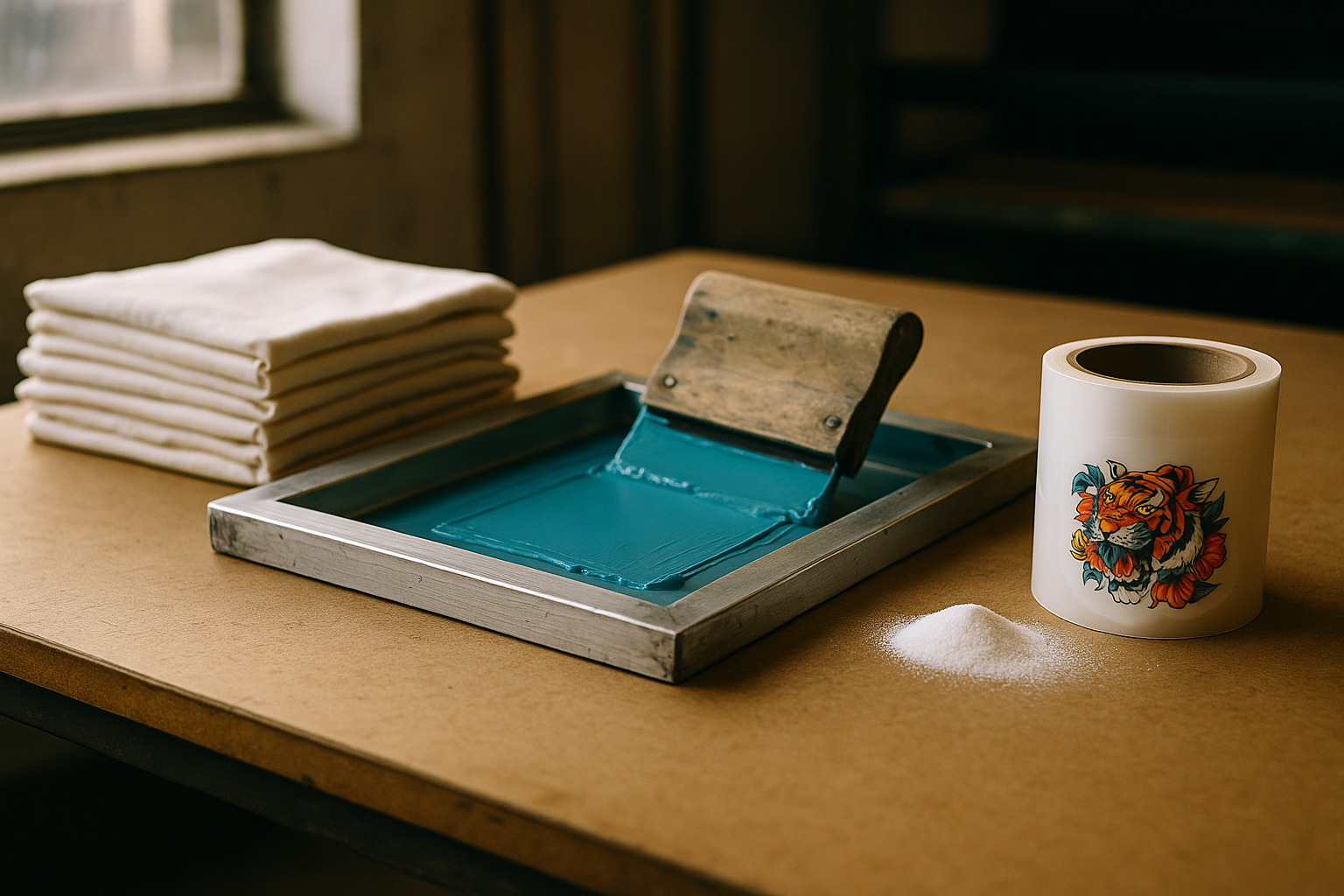
Screen printing pushes plastisol or water-based ink through a mesh screen onto the garment. Each color in the design needs its own screen, its own setup, and its own pass. After printing, the ink is cured under a flash or conveyor dryer at around 320°F. Done well, the result is a soft, durable print that has stood the test of time — literally since the early 20th century.
DTF Printing in a Nutshell
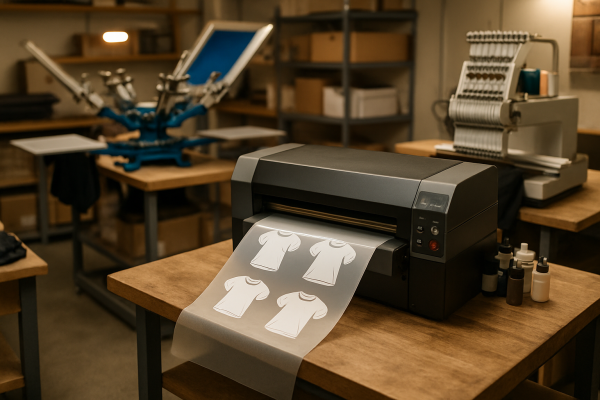
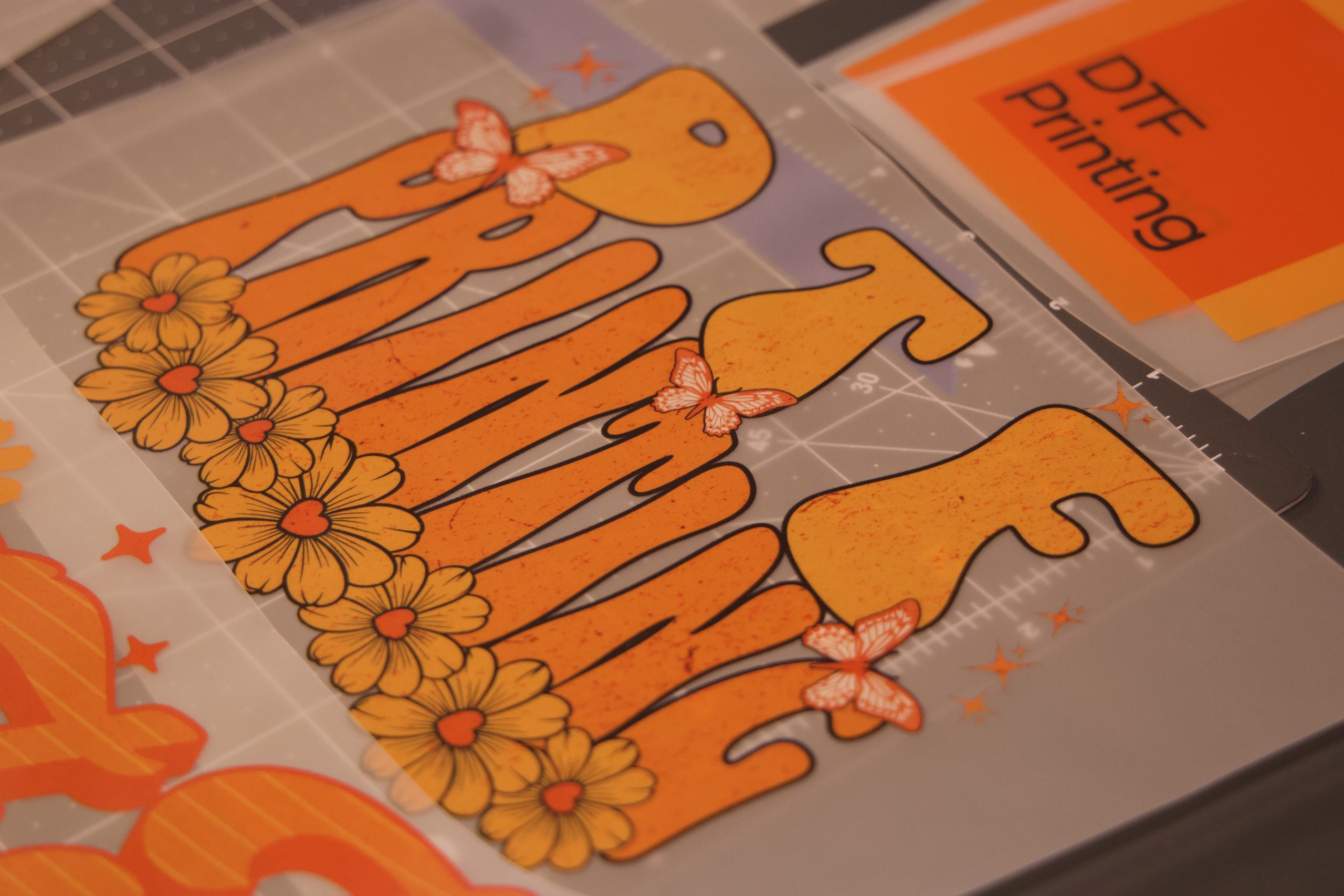
DTF (Direct-to-Film) prints your design onto a PET film using water-based pigment inks, including a white underbase. While the ink is still wet, you dust the print with a hot-melt adhesive powder, cure it in an oven or under a heater, and then heat-press the film onto the garment. Peel the film off, and your design is bonded to the fabric. No screens, no separations, no registration — just print, powder, press.
Where DTF Wins
DTF has earned its place in modern shops for some very practical reasons. If your work skews toward the situations below, DTF is probably your friend.
- Short runs and one-offs. There's essentially no setup. A single shirt costs about the same per print as the hundredth shirt. For online stores, personalization, and small custom orders, that's a huge advantage.
- Full-color, photographic artwork. Gradients, drop shadows, photo reproductions, and complex illustrations print without color separations or halftone headaches.
- Mixed fabrics. The same transfer sticks reliably to cotton, polyester, blends, nylon (with the right film), and even some performance fabrics. You don't need separate ink systems for each substrate.
- Lower barrier to entry. A small DTF setup fits in a spare room. There's no darkroom, no emulsion, no washout booth, no reclaim station.
- Inventory-friendly. You can gang multiple designs on one sheet of film, press them as orders come in, and store transfers flat for months.
Where Screen Printing Wins
Screen printing isn't going anywhere, and for good reason. Once the setup is done, it's hard to beat on several fronts.
- Large production runs. Once your screens are burned and the press is dialed in, you can fly through hundreds or thousands of impressions per hour. Cost per shirt drops dramatically with volume.
- Specialty inks and effects. Puff, high-density, suede, shimmer, glitter, glow, discharge — screen printing offers a deep toolbox of effects DTF can't really mimic.
- Hand feel on light garments. A well-executed water-based or discharge screen print on a light cotton tee can feel like nothing at all. DTF prints, while soft compared to old-school plastisol transfers, still sit on top of the fabric.
- Cost at scale. For a 500-piece run of a 1- or 2-color design, screen print ink and labor cost pennies per shirt. DTF film, powder, and ink usage stay relatively constant per impression.
- Proven longevity. Properly cured plastisol can survive 50+ washes looking sharp. DTF durability has improved a lot, but screen prints still have the longer track record.
A Side-by-Side Decision Framework
Here's a simple way to think it through when a job lands on your desk.
Run Size
- 1 to roughly 24 pieces: DTF, almost always.
- 24 to 72 pieces: it depends — count the colors and check your screen setup cost.
- 72+ pieces with 1–4 colors: screen print usually wins on cost.
- 72+ pieces with 6+ colors or photo-realistic art: DTF may still come out ahead.
Color Count and Detail
- 1–3 spot colors with clean vector art: screen print territory.
- Gradients, photos, simulated process work: DTF is faster and cheaper to set up.
- Tiny text under 6pt or fine line work: both can do it, but DTF is more forgiving for new operators.
Fabric Type
- 100% cotton: either method works beautifully.
- Polyester athletic wear: DTF handles dye migration better than untreated plastisol; screen printers need poly-specific inks and blockers.
- Tri-blends and unusual fabrics: DTF tends to be more plug-and-play.
- Nylon jackets, bags, hats with curved surfaces: specialty DTF films exist; screen printing struggles on curves.
Turnaround Time
- Same-day or next-day order: DTF, no contest.
- Standard 1–2 week production: either method fits.
Cost: A Realistic Look
This is where a lot of shop owners get tripped up. Screen printing has lower consumable costs but higher setup costs. DTF flips that math.
A rough breakdown most operators see:
- Screen print setup: roughly $15–$25 per screen in labor and materials, paid once per color per design.
- Screen print consumables: often under $0.10 per impression on a 1-color job.
- DTF setup: essentially $0 — just send the file to the RIP.
- DTF consumables: commonly $0.50 to $2.00 per print, depending on size, ink coverage, and your supplier.
The break-even point varies, but for a typical 2-color front print, screen printing usually beats DTF somewhere between 25 and 50 pieces. Run the numbers for your own shop — your ink costs, labor rates, and electricity bills make a real difference.
Quality and Feel: Honest Trade-Offs
Let's be straightforward. A premium water-based screen print on a soft cotton tee has a hand feel DTF can't quite match. The ink sinks into the fibers rather than sitting on top. For boutique brands selling $40 tees, that difference matters.
On the other hand, modern DTF transfers are dramatically softer than the old plastisol heat transfers many of us grew up with. On a hoodie, sweatshirt, or performance tee, most customers can't tell the difference — and the color reproduction often beats what a four-color process screen print would produce.
Why Many Shops Run Both
The shops doing the best work today usually aren't picking sides. They're routing each job to the method that fits.
A common workflow: screen print the bread-and-butter team orders and bulk corporate runs; use DTF for online store orders, personalization, sample mockups, and any job under two dozen pieces.
DTF also makes a great backstop for screen shops. Customer wants to add three more shirts a week after the original run? Print a DTF transfer instead of re-burning screens. Need to add a name and number to a jersey? DTF handles it. Got a rush job that can't wait for screen setup? Same answer.
The Bottom Line
Screen printing and DTF aren't enemies — they're tools with different sweet spots. Screen printing rewards volume, specialty effects, and the soft hand of water-based inks. DTF rewards flexibility, fast turnaround, full-color art, and the ability to say yes to small orders without losing money.
If you're just starting out and trying to pick one, think about the customers you want to serve. If you're chasing wholesale and team contracts, lean screen. If you're building a custom, on-demand, or e-commerce brand, lean DTF. And if you can swing both eventually, you'll have a much easier time saying yes to whatever walks in the door.