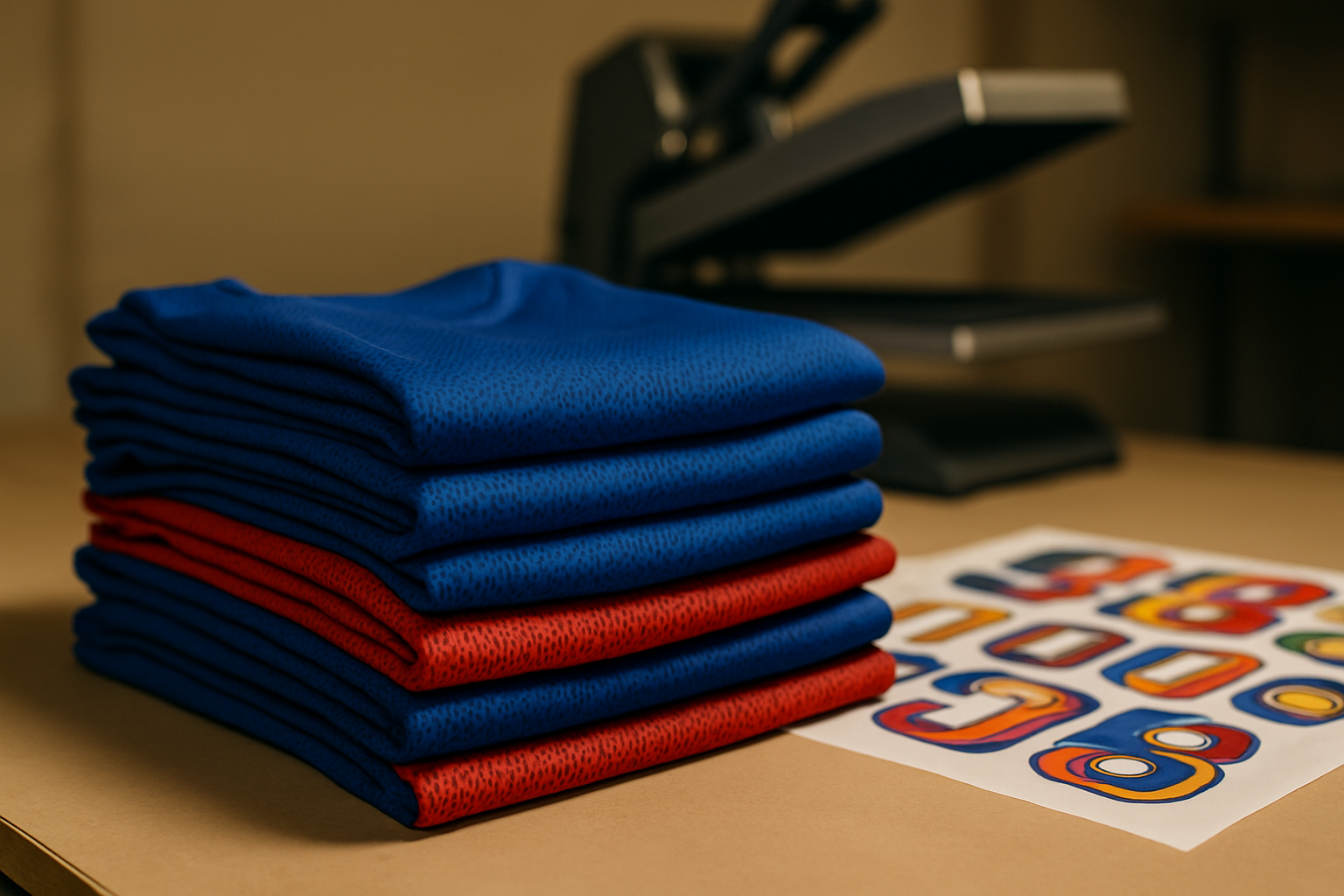
If you've ever spent a Saturday weeding 30 sets of player names off heat-transfer vinyl, you already know why DTF printing has crept into so many team-uniform shops. Names, numbers, and logos — the bread and butter of sportswear decoration — are exactly the kind of work DTF was built for. Full color, no weeding, soft hand, and fast turnaround when a coach calls Friday afternoon needing 22 jerseys for Sunday.
That said, sportswear has its own quirks. Polyester dye migration, stretchy mesh panels, sublimated base jerseys, and the constant abuse of washing machines all push DTF transfers harder than a cotton t-shirt ever will. Let's walk through how to make this work reliably.
Why DTF Makes Sense for Team Uniforms
For decades, the default for jersey numbers and names was heat-transfer vinyl (HTV) cut on a plotter. It works, but it's slow when you have full rosters and multi-color logos. Screen printing handles big runs beautifully but isn't economical for short, personalized work. That's the gap DTF fills.
A few reasons shops are leaning on DTF for sportswear:
- Full color in one pass. Gradient logos, mascots with shading, and sponsor patches all come out without color separations or multiple screens.
- No weeding. Names with thin script, tight kerning, or small lettering print cleanly without picking out tiny counters by hand.
- One-offs are profitable. Printing a single replacement jersey or a goalie's custom name doesn't require setup costs.
- Stretch and recovery. A properly cured DTF transfer flexes with athletic fabrics better than thick plastisol or layered vinyl.
- Mixed substrates. The same transfer works on cotton tees for fan gear, polyester jerseys for the team, and tri-blend warm-ups.
Handling Polyester and Dye Migration
Most performance jerseys are 100% polyester, often dyed in bright reds, royals, or blacks — exactly the colors most prone to dye migration. When you press at typical DTF temperatures (around 300–320°F for 10–15 seconds), the dye in the fabric can sublimate and creep into your white underbase, turning it pink, gray, or muddy a few hours or days after pressing.
You have a few practical defenses:
- Use low-temp DTF films and powders. Several suppliers now sell films and TPU powders rated for pressing at 260–280°F. Lower heat means less dye activation.
- Press shorter and firmer. A 5–8 second press at medium-firm pressure with a follow-up post-press through parchment is often enough once the adhesive is properly cured at the powder stage.
- Choose poly-blocking inks if available. Some DTF ink sets include a heavier white that acts as a partial dye blocker. It's not magic, but it helps.
- Test the fabric first. Press a scrap of transfer onto the actual jersey, then leave it in a hot car or warm window for 24 hours. If it's going to bleed, you'll usually see it.
Sublimated jerseys — the kind printed all-over with team graphics — are the worst offenders. The dye is fresh, plentiful, and eager to migrate. Always test before committing a roster's worth of transfers.
Sizing Names and Numbers Correctly
Most leagues have rules about lettering height, especially for school and youth sports. Common conventions look something like this:
- Player names: typically 2 to 3 inches tall across the upper back.
- Front numbers: 4 to 6 inches tall, centered on the chest or upper left.
- Back numbers: 8 to 10 inches tall, centered between the shoulder blades.
- Sleeve numbers: 2 to 4 inches, depending on sleeve real estate.
Always confirm with the league or athletic director — NFHS, NCAA, and youth leagues all have slightly different specs, and a coach who finds out at the first game that numbers are too small will not be a repeat customer.
Font Choices That Hold Up
Thin, tall fonts look sharp on screen but can crack or peel at the strokes after a season of washing. For names especially, stick to medium-weight or bold athletic fonts. If a customer insists on a fine script, bump the stroke weight up at least 10–15% before printing.
Building a Production Workflow
Sportswear orders almost always involve repetition: same logo, same number font, twenty different names. A little workflow planning saves hours.
- Set a roster template. Build an art file with logos and numbers locked in place, and a swappable text layer for names. Most RIP software lets you batch-process variable text.
- Gang the sheet. Print all 22 player names together on one sheet, then a separate sheet of numbers, then logos. This minimizes film waste and keeps registration consistent within a job.
- Label everything. Cut sheets into individual transfers, label with player name and jersey size, and bag them. Pressing is much faster when you're not squinting at film trying to tell #12 from #21.
- Press in a logical order. Logo first (centered template), then number, then name. A laser alignment tool or a simple cardboard jig pays for itself within one team.
Pressing Technique on Athletic Fabrics
Polyester jerseys, mesh inserts, and stretch panels each behave differently under a heat press. A few field-tested tips:
- Pre-press the jersey for 3–5 seconds to remove moisture and flatten seams. Skipping this is the #1 cause of edges lifting after the first wash.
- Use a Teflon or parchment cover sheet on every press, especially over mesh. Adhesive can squeeze through mesh holes and gum up the platen.
- Mind the seams. A number that crosses a side seam or shoulder yoke will press unevenly. Use a pressing pillow or a smaller platen to isolate the print area.
- Cold peel vs. hot peel depends on your film. Read the spec sheet from your supplier and stick to it — guessing here causes ghosting and partial transfers.
- Post-press for 5 seconds with parchment on top after peeling. This melts the surface of the transfer slightly, improving washfastness and softening the hand.
Wash Durability and Customer Expectations
Athletes are tough on their gear. A jersey gets washed in hot water with bleach alternatives, tossed in a hot dryer, and stretched repeatedly. Set expectations honestly: a well-pressed DTF transfer on polyester, with proper post-pressing, commonly survives 40–50 wash cycles before any visible wear. That's a season or two of hard use, which is what most teams need.
Tell your customers to wash inside out, in cold water, and to skip the dryer when possible. Most won't follow the advice perfectly, but the ones who do will brag about how good the jerseys still look in year two.
Pricing the Work
Pricing varies widely by region, but a common structure for team orders looks something like:
- Front logo: flat fee per jersey
- Back number: flat fee per jersey
- Player name: an add-on per jersey, often $4–8 because of the personalization labor
- Sleeve number or sponsor patch: small add-on each
Bundle these into a "full uniform decoration" package price for the coach. It's easier to quote, easier to invoice, and protects your margin on the personalization labor that actually eats your time.
Final Thoughts
DTF won't replace screen printing for 500-piece booster club tee runs, and it won't replace tackle twill on a varsity letter jacket. But for the everyday work of getting names, numbers, and logos onto team jerseys quickly and cleanly, it's hard to beat. Test your fabrics, dial in your press, build a clean workflow, and you'll find sportswear is one of the most repeatable, profitable corners of the DTF business.