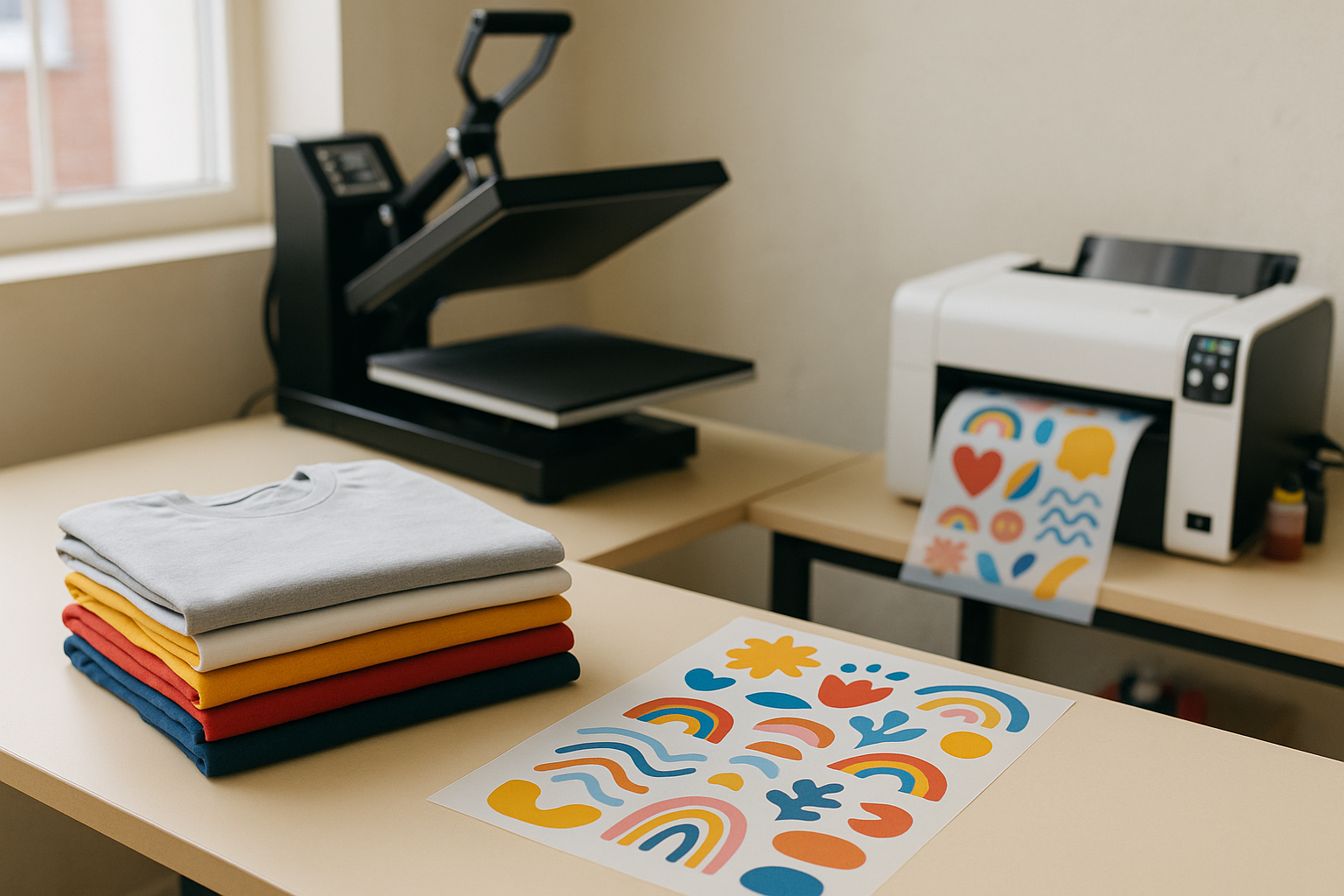
If you've been running a print-on-demand (POD) shop with sublimation or screen printing, or you're just getting started and weighing your options, DTF deserves a serious look. Direct-to-Film printing has quietly become one of the most flexible ways to fulfill custom apparel orders, especially when you're dealing with the unpredictable mix of designs, fabrics, and order sizes that POD throws at you.
Let's walk through what makes DTF a good fit for print-on-demand, where it can trip you up, and how to set yourself up for steady, profitable fulfillment.
Why DTF Works So Well for Print-on-Demand
POD lives or dies by versatility. One customer wants a single black hoodie with a full-color logo. The next wants three cotton tees, two tri-blend tanks, and a polyester gym bag — all with different artwork. With sublimation, you're locked into polyester and light colors. With screen printing, single-shirt orders eat your margins alive in setup time.
DTF sidesteps both problems. The same printed film transfers cleanly onto cotton, polyester, blends, canvas, denim, nylon (with the right film), and even leather. You don't pre-treat the garment the way you would with DTG. You don't burn screens. You print, powder, cure, and press — and the result is a soft, stretchy, full-color image with a white underbase already built in.
For a POD operator, that means:
- One workflow handles nearly every garment type a customer might order.
- You can gang-print dozens of small designs onto a single sheet of film and press them on demand over the next several weeks.
- Order minimums effectively drop to one without losing money on setup.
- Dark garments are no harder than light ones.
Print Transfers On-Demand vs. Stock-and-Press
There are two ways most POD shops use DTF, and it's worth deciding early which model fits your business.
On-Demand Printing
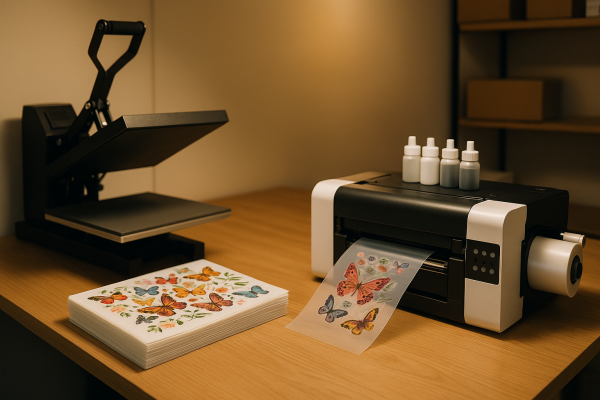
An order comes in, you queue the design in your RIP, print and powder a transfer, cure it, and press it. This is the most flexible approach and keeps your inventory at zero, but it requires the printer to be warm, inks circulating, and someone available to run jobs as they land.
Stock-and-Press (Pre-Printed Transfers)
You batch-print your most popular designs onto film in advance, store the cured transfers in a cool, dry, dark place, and press them as orders come in. Most operators report cured DTF transfers stay good for several months — some claim a year or more — if they're protected from humidity and UV light. This model is great for shops with a defined catalog or recurring designs (team merch, niche stores, drop-style brands).
Plenty of POD shops blend both: stock the steady sellers, print the one-offs as they come.
Equipment You Actually Need
You don't need a full industrial setup to start fulfilling POD orders with DTF. Here's a realistic starter list:
- A DTF printer. Options range from converted desktop Epson units (L1800, XP-15000) up to dedicated 24-inch and 60-inch roll-fed machines. For POD volumes under maybe 50 shirts a day, an A3-format dedicated DTF printer is a sensible middle ground.
- RIP software. Something like CADlink, AcroRIP, or the RIP bundled with your printer. The RIP handles the white underbase channel, color management, and ganging.
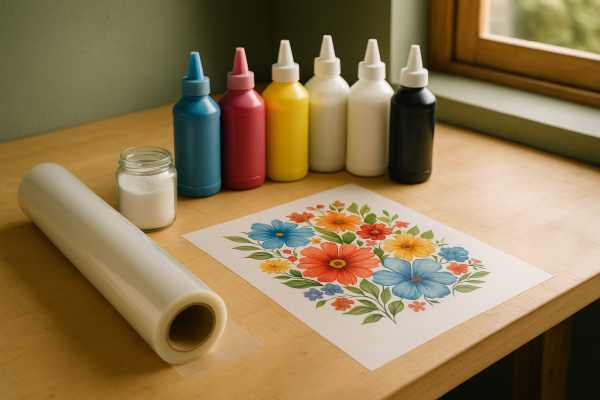
- DTF inks. CMYK plus white. Stick with a single supplier's recommended ink set — mixing brands is a fast way to clog printheads.
- PET film. Cold-peel or hot-peel. Most POD shops prefer cold-peel for forgiveness; hot-peel is faster once you're dialed in.
- Adhesive powder. Standard TPU powder works for cotton and most blends. Some operators keep a finer powder on hand for detailed designs.
- A curing solution. A small curing oven, a heat press used in hover mode, or a dedicated shaker-curer for higher volumes.
- A heat press. Clamshell or swing-away, 16x20 is the workhorse size. A quality press matters more than people think — even pressure is everything.
Pricing Your DTF POD Orders
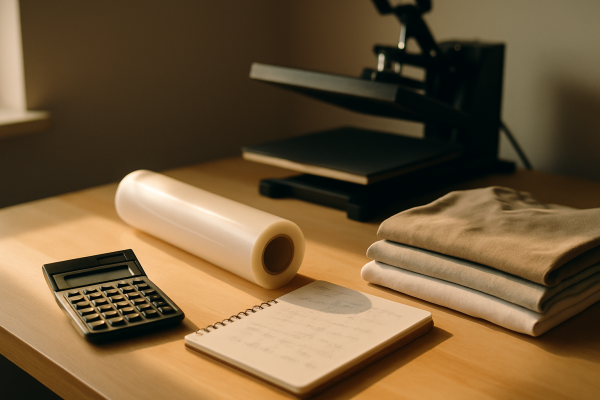
This is where new operators leave money on the table. Your cost per transfer isn't just ink and film — it's also powder, electricity, printhead maintenance, wasted prints, and your time.
A common rough breakdown for a 10x12 inch full-color transfer:
- Ink: roughly $0.50–$1.50 depending on coverage and ink prices
- Film: $0.30–$0.60
- Powder: $0.10–$0.25
- Electricity and consumables: small but real
Most shops land somewhere between $1.50 and $3.00 in materials per medium-size transfer, before labor. Add the blank garment, your pressing time, packaging, and platform fees, then mark up to a margin you can actually live on. Don't race competitors to the bottom — your reliability and turnaround are worth charging for.
Integrating DTF With Your POD Storefront
If you're selling through Etsy, Shopify, WooCommerce, or a marketplace like Amazon, the workflow looks something like this:
- Order lands in your storefront with the customer's design or selected artwork.
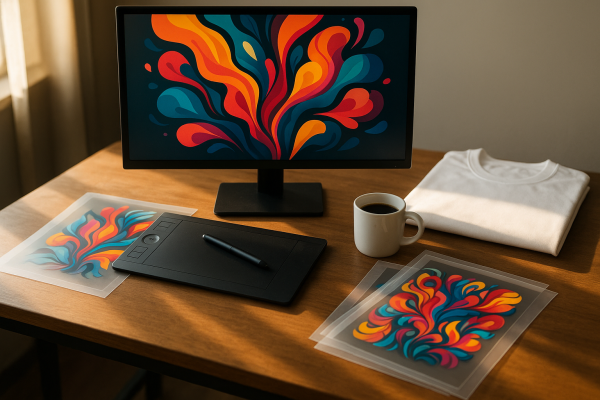
- You (or an automation tool) export the design files and pull them into your RIP.
- You gang multiple orders onto a single film sheet to save material.
- Print, powder, cure, and either press immediately or label and stage the transfer.
- Press onto the blank, fold, package, and ship.
Tools like Printful and Printify don't currently offer DTF in the same automated way they offer DTG, so most DTF-based POD sellers run their own fulfillment. That's a tradeoff: more hands-on work, but better margins and quality control than reselling someone else's print.
Common Pitfalls to Avoid
A few mistakes show up over and over in DTF POD operations:
- Skimping on white ink agitation. White ink settles fast. If your printer doesn't have automatic circulation, you need to shake bottles and run maintenance cycles religiously, or you'll find yourself unclogging heads on a Friday night.
- Underestimating pressing time per order. Printing the transfer is fast. Pressing each garment correctly — preheat, press, peel, post-press — still takes 60–90 seconds plus handling. Build that into your order capacity.
- Inconsistent powder application. Too little and the transfer cracks or peels. Too much and you get a stiff, gummy edge. Practice until it's even.
- Ignoring fabric specifics. Polyester wants lower temperatures (around 280°F) to avoid dye migration and scorching. 100% cotton can take 300–325°F. Read the blank's spec sheet.
- Not test-washing. Before you list a new garment type, press a sample, wash it 10 times, and inspect. Your customers will do this for you if you don't.
Is DTF Right for Your POD Business?
If you're selling a tight catalog of polyester products in light colors, sublimation is probably still cheaper and faster. If you're doing high-volume runs of the same design, screen printing wins on per-unit cost.
But if you're running a true print-on-demand operation — varied designs, varied garments, unpredictable order sizes, and a customer base that expects full color on dark cotton hoodies tomorrow morning — DTF is hard to beat. The barrier to entry is reasonable, the learning curve is manageable, and the finished product holds up well to washing when you do it right.
Start small, dial in your process on a handful of products, document your settings obsessively, and scale only when your workflow is boring. That's how POD shops survive past their first holiday season.